


- Article
- Comments (0)
'I want India to be a badminton powerhouse'
Pullela Gopichand, badminton great and Saina Nehwal's mentor, tells Ajay Rana why he has set his sights so high.
Tags : Badminton | Pullela Gopichand | Saina Nehwal |
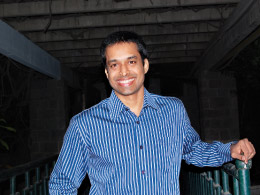 Arjuna Award in 1999, the Rajiv Khel Ratna in 2001 and Dronacharya Award in 2009: could an Indian sportsperson ask for more? Yes, if that individual happens to be badminton great Pullela Gopichand.
His life and career add up to much more than the sum total of the aforementioned awards and the All-England Championship title that the gifted player-turned-coach won in 2001.
Since hanging up his racquet, Gopichand, a role model as good as any India has ever produced, has diverted his energies to grooming badminton champions of the future.
At the launch of his biography in the national capital late last year, the 39-year-old shuttler received the perfect plaudit from Union sports and youth affairs minister Ajay Maken. The latter quipped: “P stands for Pullela and P also stands for Padma Shri.”
The biography, Pullela Gopichand - The World beneath his Feet, has been authored by former national badminton champion Sanjay Sharma and Shachi Sharma. The story of the champion’s life and career has all the ingredients that an aspiring sportspersons can draw inspiration from.
The book traces the rise of a young boy from a humble background who rose to the pinnacle of his chosen sport through sheer dint of hard work. Gopichand sustained his thirst for success despite a career-threatening injury.
Gopichand is an icon worth emulating not just for the standards he has set on the badminton court but also for the stands he has taken on matters off it. The biography documents the highs and lows of Gopichand’s career while narrating anecdotes that illustrate the reasons why he is such a force.
Today, as a talent spotter and coach, he is giving back to the game everything that he earned from it. Gopichand is passing on his exemplary skills to a future generation of Indian badminton players.
Gopichand’s day at the academy begins as early as 4.30 in the morning and stretches all the way until seven in the evening. He never complains about what the sporting set-up in this country lacks; instead he goes about quietly making a difference through his own personal efforts.
He is the man who was instrumental in shaping Saina Nehwal into the player she is today. Gopi always aims for the best.
‘No matter what, always think you can win’
How do you rate Indian badminton at present? How is the current lot doing?
The top players are doing well. They are on the right track. In the years to come they will do more hard work and get more confidence. And with that they will do better.
Apart from the established names, who are the most promising badminton players?
PV Sindhu is definitely one of them. We expect her to get better. There are some other young singles players like Guru Sai Dutt, Sai Praneeth, HS Prannoy, Sameer Verma, Saurabh Verma, K Shrikant and Praful Joshi. Six to seven players have huge potential and I expect them to do well at the world level.
What can we expect in the London Olympics?
We have the potential to win two medals. I do hope that happens. Apart from Saina Nehwal I expect medals from the Jwala Gutta-Ashwini Ponnappa pair and also from the Jwala Gutta-Valiyaveetil Diju pair.
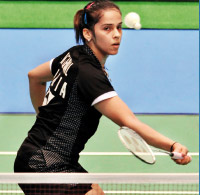 Last December Saina created history by reaching the BWF (Badminton World Federation) Superseries Final. But since then, she has not been able to perform to her potential. Will she bounce back?
She is just 21. I expect her to do well in the future. She is still young. Ups and downs are normal in a sportsperson’s life. The kind of schedule she has, she will find it difficult to come back on track immediately but we are working on that. She is a hard-working girl and I have belief in her.
People remember you for your All-England Championship win. But it wasn’t easy. How bad were your injuries?
Injuries were tough for me. But I have learnt from each of them. Whatever love I have for the game is also because of injury. I was away from my game. It made me love my game even more.
Have you ever thought of quitting badminton because of the ups and downs?
No, never. I took each setback as a challenge. I love my sport too much to be away from it. Each of my injuries strengthened my resolve. Since I was away from this sport for a little while I realised how beautiful this sport is. I just love this sport.
Now you run a badminton academy. What drives you?
I don’t regard it as hard work. I love my players. I want them to play well. That’s very important for me. If I feel a bit tired, I say to myself my presence will lead to better training for the players. That enthuses me to stick to my schedule.
In your academy, you play matches with your players on Thursdays and Saturdays. Has it helped you understand your players better?
As a coach it helps me to understand the players’s mindsets, weaknesses and strengths. It also gives me an opportunity to demonstrate things more clearly.
You still concentrate hard on your fitness. Is it tough to keep up with the youngsters?
I love my coaching job. That keeps me going.
You come across as somebody who is soft and reticent. But as a coach you sound very aggressive.
How do you manage this transformation?
As a coach you need to carry the energy, you need to carry the work ethic, you need to command the whole group of players. That is a very important aspect.
You are the first sportsperson in Indian history who has got the Khel Ratna, Arjuna Award and Dronacharya Award. It must be quite satisfying.
As a sportsperson I am pretty happy. I am quite satisfied with my life as a coach. All these achievements were because of a lot of work. But I don’t look at it from the perspective of awards. I did the job given to me. It is due to God’s blessings that I’ve been successful.
You have married a former badminton player. Has that helped you in running your academy?
She is very understanding. I get a lot of support from her and my parents. Because of their support today I continue to work the way I do. I am away from my family for long stretches.
You have two children and the elder daughter is also playing badminton. Last year she won the under-10 championship. Would you like them to pursue badminton?
She is only eight years old. I don’t know whether they will be playing professionally or not. Sport is a great way of life. I will support them if they want to play. But I won’t press them to play.
What would you like to say to those who always complain that India doesn’t have a sporting culture?
I think the key is not to complain. I think the key is to accept things as they are. But don’t accept the result if they are negative. The key is to think no matter what the situation is I am going to win.
In India, big academies are confined to one city. Like National Cricket Academy (NCA) and your Badminton Academy in Bangalore, and a squash academy in Chennai? Don’t you feel it is not good for
Indian sports?
I think it is important that we should have more infrastructure, better officials and committed coaches. Everything has to grow manifold. Infrastructure has to grow, coaches have to grow,
training has to grow and players have to grow.
What do you think about the proposed Sports Bill?
If you look at the overall aspects of the Bill, something which excites me and which I find very good is the 25 per cent reservation for sportspersons. It is really fantastic. The general principles of good governance and accountability are important aspects of administration. With more accountability there will be more transparency. I support this Bill.
Will we see you playing an important role in the federation?
No, I don’t think I am cut out for the job. But I would do everything to make India a powerhouse in world badminton. I would also love to see sport as an important aspect of Indian culture.


 Issue Dated: Feb 5, 2017

